
Everything we’ve said.Everything said back.
Dispatches out, echoes in. Press releases, founders letters, thought leadership, and podcasts on one side of the wire; what the world printed back on the other. Newest first, every word on the record.



The Matrix is Your Liability
Why AI replaces the specialist org with something flatter, faster, and finally accountable.

Why AI replaces the specialist org with something flatter, faster, and finally accountable.
Anyone that's responsible hates the matrix. It was necessary. Now it's a liability.
Expertise used to be scarce. You could not put a senior analyst, a supply planner, a pricing lead, and a media strategist on every team. There were not enough of them, and they cost too much. So you pooled them into functions, centers of excellence, shared services. Then you rented that expertise back to the business through dotted lines, steering committees, and quarterly reviews.
That was the matrix. Business lines on one axis, specialties on the other. Everyone reporting in two directions at once. It worked because it had to. No single team could hold all the expertise a business needs to compete.
That constraint is gone.
AI does the specialist work now. Analytics. Forecasting. Orchestration. Execution. The work that used to need a dedicated function, a ticket in a queue, and a six-week turnaround now happens on demand, in context, for the person who owns the result.
So the scarce resource is no longer expertise. Expertise is abundant and instant now. The scarce resource is knowing your customer better than anyone else.
That breaks the matrix. If a business line can summon the specialist work itself, it has no reason to borrow it. The dotted lines come down. The coordination layer comes down. The org gets flatter. Not because flat is fashionable, but because the reason for the layers is gone.
The matrix killed accountability. NASA, GE, and Citibank pioneered it and it was useful then. Now it is a corporate liability. The Matrix is where people burrow, hoard access, and where office politics thrive. It's now the biggest organizational risk and it's up to the CEO and CHRO to come together. In this new world of speed, those first to do it are the ones that will anchor their market position and fortify, winning in their sectors.
When a number misses, who owns it? The business line blames the function. The function blames the business line. Both are half right, so no one is responsible. The matrix turns every outcome into a shared outcome, and a shared outcome has no owner. That is why so much enterprise work feels busy and answerable to no one.
Collapse the matrix and ownership returns. One team owns the customer. One team owns the result. They have the tools to do the specialist work themselves, so there is no function to blame and no committee to hide behind. The results are definable. The owner is obvious. That is uncomfortable. That is the point.
The matrix was built for consensus, not speed. Every real decision touched three functions, so every real decision became a negotiation. By the time the group aligned, the moment had passed.
Give the owner the capability directly and the negotiation disappears. They see the analysis, run the scenario, and act in the same hour. Decisiveness stops being a personality trait. It becomes a property of the structure. The fast company is no longer the one with the boldest leaders. It is the one built so that moving fast is the default.
But a team flying blind cannot act with confidence, no matter how flat the chart.
A business line can only move with conviction if it sees the whole picture at once. Finance, supply, the channel, the market, right now, and how all of it connects. AI that sees one slice gives generic answers. AI that sees the whole business, live, gives contextual ones. That is the difference between a smart guess and a decision you can stand behind.
This is the part most people miss. The flattening, the accountability, the speed. All of it depends on whether your AI can see your business in context. Not a copy of it. Not last quarter's export. The live, connected, whole thing.
So picture the organization that comes next.
No specialty silos. No functions waiting in a queue. Teams built around business lines, each one pointed at a single job: know the customer better than the competition. The specialist work, the analytics, the orchestration, the execution, runs underneath them, in context, on demand. Fewer layers. Clear owners. Faster decisions. Results you can name out loud.
That is not a softer organization. It is a stronger one. More accountable than the matrix ever allowed. Faster than the matrix could ever move.
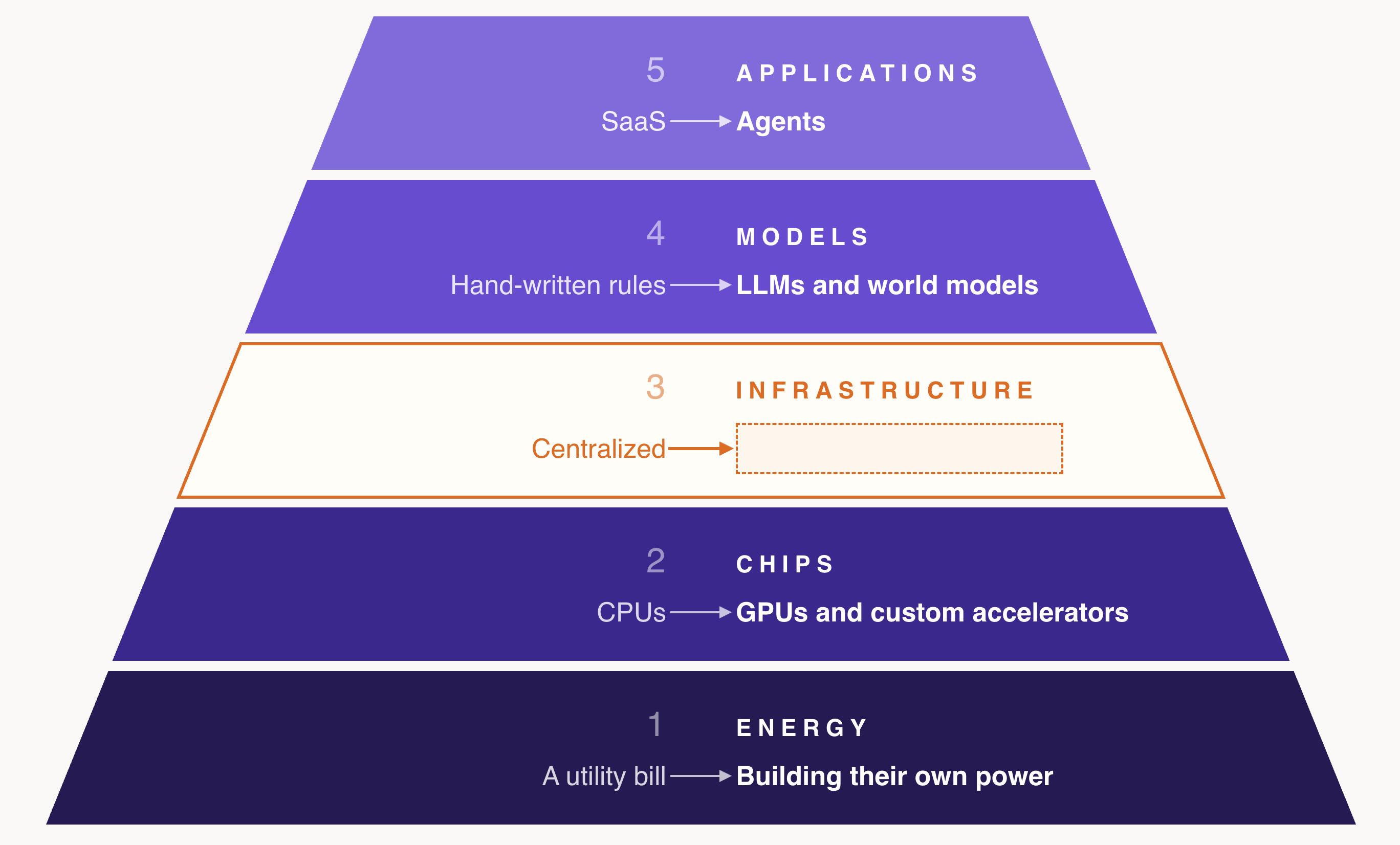
The only thing between most companies and that future is their data. The AI cannot see the business in context because the business is not one connected thing. It is thousands of copies, scattered across systems that were never built to talk.
That is the problem we built Adaly to solve. We give AI a live, governed line of sight across every system a company runs on. So it sees the whole picture and acts on it. Stop copying. Start connecting. Then watch the matrix fall away.


Want it from the source?
Every transmission above is on the record. For interviews, statements, or anything the wire has not carried yet, talk to the people who said it.